
Lab Billing Audit Readiness Guide: How Labs Can Stay Ahead of Audit Risks
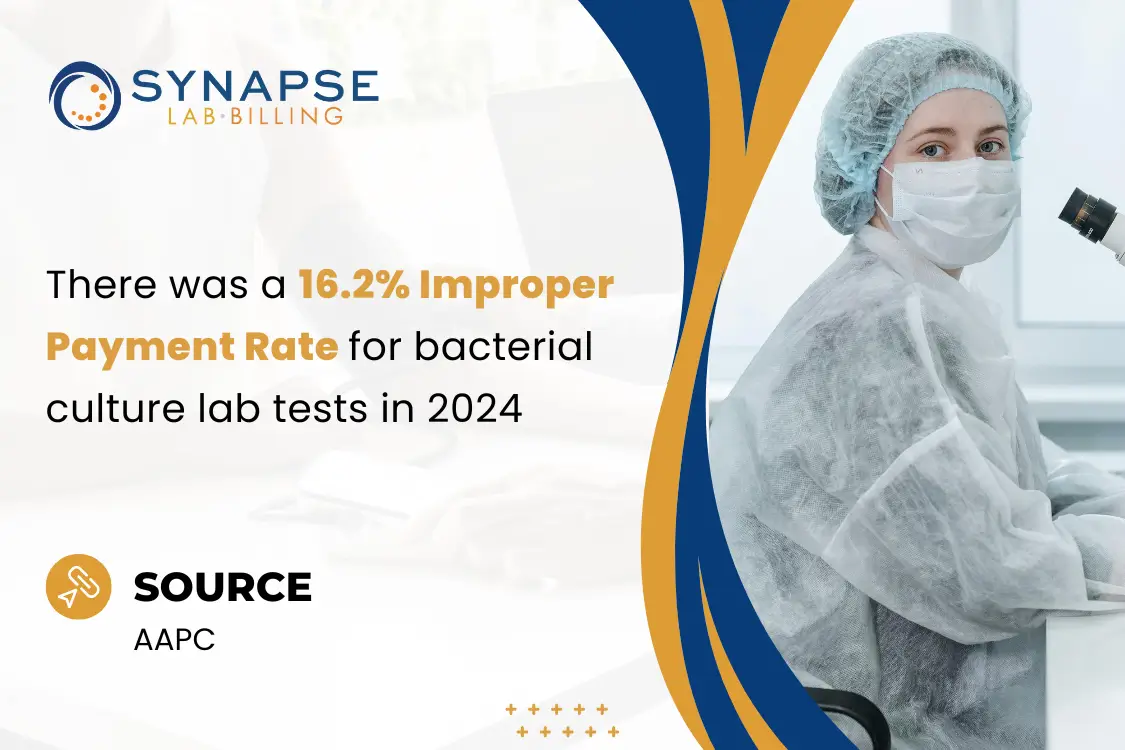
Did you know? Labs are currently the most audited sector of healthcare, and the pressure to be audit-ready is rising. An annual report published by the U.S. Department of Health & Human Services (HHS) shows a 16.2% improper payment rate for bacterial culture lab tests in 2024, which is $8.95 million in overpayments.
As a result, the Office of Inspector General (OIG) made sure to audit high-volume labs for “patterned overbilling.” Before a target is out on your back, it’s vital that you understand what it takes to be audit-ready.
Key Takeaways
Why are labs targeted by payer audits?
Even though individual claims are typically modest (usually under $200), the sheer volume means small errors can add up quickly, making labs a frequent focus of audits.
But the dark truth is that recent news shows clinical labs being targeted for overbilling and fictitious claims:
Oregon Clinical Laboratory (2026): The owner has been charged with healthcare fraud after allegedly submitting more than $46 million in fraudulent claims to Medicare Advantage plans for laboratory testing services that were never ordered or carried out, according to the US Attorney’s Office, District of Oregon.
St. Louis County Lab (2024): The company owner admitted submitting more than $3.8 million in fraudulent claims to Medicare, Medicaid, and private health care benefit programs.
That’s why the OIG scrutinizes clinical labs so closely. Next, let’s take a closer look at the audit activities you might experience.
What audits are conducted at labs?
Labs are more likely to be selected for audit when certain red flags are present. These include:
High utilization of uncommon lab codes
The OIG stated, “We will review Medicare payments for clinical laboratory services to determine laboratories’ compliance with selected billing requirements. We will focus on claims for clinical laboratory services that may be at heightened risk for overpayments.”
Are you spotting these red flags in your lab? Then it’s a major sign to be audit-ready. See below how.
How can laboratories prepare for audits?

At Synapse Lab Billing, we advocate for a proactive rather than reactive approach to audit preparation. Implementing these strategies enables your lab to project accuracy and operational efficiency, avoiding the penalties that often follow a sudden, unprepared audit.

1. Build an audit‑ready documentation system
Use a simple, consistent template to document medical necessity, something like ‘ordered per NCCN guideline’ or ‘for treatment monitoring.’ Just make sure your wording matches what your local Medicare coverage policy (LCD) expects.

2. Run regular internal audits
Every quarter, run an internal audit on your lab’s high‑risk or high‑volume tests, like oncology companion diagnostics, metabolic panels, or expensive molecular tests.
Track the kinds of errors you see, such as missing diagnoses, wrong modifiers, or bundling mistakes. Then use what you learn to update your standard operating procedures (SOPs) and improve how you educate providers.

3. Optimize coding and billing workflows
Integrate LIS (Lab Information Systems) with billing software to enable seamless data flow and automate charge capture from orders to claims.
Also, put a simple pre‑billing checklist in place. It should catch common problem areas before claims go out. For example, duplicate billing, unsupported modifiers, or incorrect use of unlisted codes.

4. Educate providers and staff
Make sure your coders and billers are trained on current Medicare LCDs and NCDs for the tests your lab runs most often. Cover things like which specimen types are allowed, how often a test can be billed, and the ‘incident‑to’ rules when applicable.
Provide quick‑reference guides (one‑page cheat sheets) for top‑risk tests and common denial patterns.

5. Establish a response protocol for TPE/ADR/UPIC letters
Designate a compliance officer or lab manager who is responsible for coordinating the appropriate response, including gathering records, coordinating with utilization review or IT, and communicating with the MAC.

6. Use feedback to improve
After each audit round, use the feedback letter as a teaching moment and go over the root causes with your coders, physicians, and billing staff so everyone understands what went wrong.
Then, update your policies, training materials, and any EMR or LIS templates to fix those issues. Finally, run another internal audit to make sure the error rates actually went down.
Synapse Support: Your Partner in Audit Readiness
As labs face intense scrutiny on compliance, you don’t have to be on your toes. You can rest easily knowing that you are partnering with a company built on more than 25 years of solid experience, driven by accuracy, efficiency, and transparency.
With Synapse’s expert team of billers and coders, payer auditors can do their jobs easily and commend your lab for upholding today’s healthcare standards.
Sign up for a free consultation with us and earn the perks of:
Complimentary A/R analysis – so you know where your money goes and bleeds.
SEO & Website Development Demo – so your patients know how to find you better.
Walk away with practical suggestions you can use right away.
About Us
Synapse Lab Billing solutions are designed to align with your laboratory’s goals while providing a clear view of operations. With Synapse, you gain real-time insights for benchmarking, compliance, and decision-making, helping you optimize workflows, reduce errors, and boost revenue.
Sources:
Dustman, R. (2025, April 17). Medicare Improper Payments Include $8.95M for Bacterial Culture Lab Tests. AAPC Knowledge Center.
https://www.aapc.com/blog/92404-medicare-improper-payments-include-8-95m-for-bacterial-culture-lab-tests/?srsltid=AfmBOoqfsmzgcnBWKg301YFRSyIkgg5aoXTWk6lLm-yfGMZ5wISQMvSk
Pakistani National Residing in Southern California Charged with Fraudulently Billing Medicare Plans. (2026). Justice.gov.
https://www.justice.gov/usao-or/pr/pakistani-national-residing-southern-california-charged-fraudulently-billing-medicare
Testing Laboratory Co-Owner Admits $3.8 Million In Fraudulent Billing. (2024, February 12). Office of Inspector General | Government Oversight | U.S. Department of Health and Human Services.
https://oig.hhs.gov/fraud/enforcement/testing-laboratory-co-owner-admits-38-million-in-fraudulent-billing/